







I. Core Dilemma of Crushing Operations in Uganda: Conflict Between Changing Demands and Fixed Equipment
Uganda is rich in mineral resources (such as copper mines in the west and gold mines in the east) and has ongoing infrastructure projects (road and housing construction). Crushing operation scenarios exhibit distinct "dynamic demand" characteristics: small-scale production equipment is needed in the early stage of mine extraction, and production capacity needs to be expanded rapidly as ore volume increases; infrastructure projects sometimes require hard rock crushing (subgrade construction) and sometimes construction aggregate processing (concrete pouring), with frequent switches in material types and processing requirements; some remote operation sites (such as northern mining areas) have limited space, making it difficult to deploy large fixed equipment, but still need to adjust production capacity according to temporary needs.
The "fixed nature" of traditional crushing equipment cannot adapt to these demands: either it is integrated fixed equipment with fixed production capacity and functions, requiring the purchase of a new complete machine for capacity expansion or scenario changes, which is costly and time-consuming; or it is single-function mobile equipment, which is flexible but cannot meet large-scale or multi-material processing needs. This conflict of "equipment failing to keep up with demand changes" has left many projects in Uganda stuck in the dilemma of "insufficient production capacity delaying construction" or "idle equipment wasting costs."
II. Modular Design: Core Solution to Address Changing Demands
Targeting the dynamic demands of Uganda's crushing scenarios, modular design crushers redefine the adaptation logic of crushing equipment with "flexible disassembly and free combination" as the core. Their core advantages are reflected in three key dimensions:
1. Core Modules Can Be Disassembled, Basic Configuration Selected on Demand
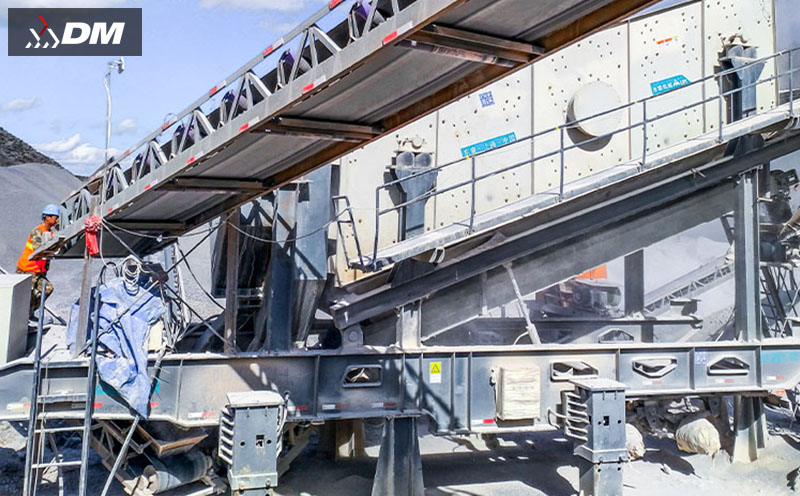
The equipment splits core components such as the crushing host, screening system, feeding module, and conveying device into independent modules, each with clear functions and unified interfaces. In the early stage of a project, basic configurations can be selected according to needs: small mines or temporary operation sites can purchase only the "crushing host + simple feeding module" to meet small-capacity, single-material processing needs and reduce initial investment; large infrastructure projects or mature mines can directly configure a complete module set of "crushing + screening + dual conveying" to achieve the full-process operation of "crushing - classification - conveying" in one step, avoiding repeated modifications later.
This "configure on demand" model is particularly suitable for small and medium-sized mining enterprises or projects with limited budgets in Uganda, eliminating the need for one-time investment in a full set of equipment and allowing for gradual functional improvement as the business develops.
2. Rapid Module Combination, Efficient and Convenient Scenario Switching
All modules adopt a standardized interface design. Replacing or adding modules does not require disassembling the entire machine—ordinary operators can complete the combination through bolt fixing and pipeline connection, significantly improving switching efficiency: when processing hard rock, a "high-wear-resistant crushing module + high-torque power unit" is matched to enhance the equipment's impact resistance; when processing aggregates, it is replaced with an "aggregate shaping module + fine screening module" to ensure uniform particle shape and qualified gradation; switching from "single ore crushing" to "crushing + screening mixed materials" only requires adding a screening module, which can be modified and put into operation within 24 hours, shortening the scenario switching cycle by 80% compared with traditional equipment.
In a Ugandan highway project, this equipment switched modules to process subgrade hard rock in the morning and process aggregates for bridge construction in the afternoon, completing the processing of two types of materials in one day without additional deployment of other equipment, greatly improving operation efficiency.
3. Flexible Capacity Expansion Without Replacing the Entire Machine
When a project needs capacity expansion, there is no need to replace the existing equipment—capacity can be upgraded by simply adding corresponding functional modules: for small mines expanding daily output from 200 tons to 500 tons, an additional crushing module of the same model can be added to the original crushing host and controlled in linkage, directly doubling the production capacity; for infrastructure projects needing to improve screening efficiency, an additional set of screening modules can be added to operate in parallel with the original system, increasing the classification speed by 50%.
This "incremental expansion" model avoids the waste of "replacing the entire machine for capacity expansion" with traditional equipment. It is especially suitable for the "expanding capacity while mining" characteristic of Ugandan mines, ensuring that the equipment value is continuously released as the project develops.
III. Practical Value of Flexible Combination: Adapting to Multi-Scene Demands in Uganda
The "flexible combination" feature of modular design has demonstrated significant value in different crushing scenarios in Uganda, solving the adaptation problems of traditional equipment:
- Remote small mining sites: Equipped with a "single crushing module + simple mobile chassis," no fixed site is required, and it can be flexibly transferred between multiple mining sites to meet small-batch, multi-location ore processing needs;
- Large infrastructure projects: Combined with a "dual crushing module + classification screening + multi-conveying" system, it can process subgrade hard rock and process aggregates, realizing "one equipment serving the entire project" and reducing equipment scheduling costs;
- Municipal solid waste treatment (e.g., around Kampala): Matched with a "anti-blocking crushing module + metal sorting module," it can crush construction waste and separate impurities such as steel bars, realizing resource recycling and adapting to Uganda's urban environmental protection needs.
IV. Practical Case in Uganda: Efficiency Revolution of Modular Equipment
After a copper mining enterprise in western Uganda introduced two modular crushers, its operation model changed significantly, perfectly adapting to the mine's full-cycle needs of "early exploration - mid-term capacity expansion - late multi-material processing":
- Exploration stage (early): Only the "basic crushing module + manual feeding device" was configured. Although the production capacity was small, it met the ore analysis needs during the exploration period, reducing initial investment by 40% compared with traditional equipment;
- Capacity expansion stage (mid-term): An "automatic feeding module + screening module" was added, increasing daily output from 150 tons to 400 tons. No host replacement was needed, and the transformation was completed in 3 days without delaying ore mining progress;
- Multi-material stage (late): The mine processed both copper ore and mining waste rock (to be processed into infrastructure aggregates). By replacing the crushing module, it could switch operation modes twice a day. The waste rock utilization rate increased from 30% to 80%, and the monthly additional aggregate sales revenue was about $8,000.
The person in charge of the mining enterprise said: "In the past, we bought small equipment for exploration and had to buy large equipment for capacity expansion, which wasted a lot of money. Now with modular equipment, we can expand capacity by adding modules and switch tasks by replacing modules. Flexibility is more important than anything else in Uganda's mining industry."
V. Operation Suggestions for Modular Equipment in Uganda
To give full play to the advantages of modular design, combined with Uganda's operating environment and project characteristics, the following operation strategies are recommended:
- Plan module reserves in advance: According to the project development plan, reserve commonly used modules (such as wear-resistant crushing modules and screening modules) in advance to avoid waiting for procurement during temporary needs and delaying operations;
- Simplify daily maintenance: Regularly check the sealing and fastening of module interfaces, especially during Uganda's rainy season, and do a good job in waterproofing the joints of modules to prevent rainwater from seeping in and affecting equipment operation;
- Adapt to transportation conditions: Some areas in Uganda have narrow roads (such as rural areas in the east). Modules can be transported in batches by small trucks to avoid the difficulty of transporting large equipment and improve the flexibility of equipment deployment.
Conclusion
Against the background of frequent changes in crushing operation demands and highly diverse scenarios in Uganda, modular design crushers break the fixed limitations of traditional equipment with the core value of "on-demand expansion and flexible combination." They not only reduce the initial investment of projects but also dynamically adjust production capacity and functions according to demand changes, perfectly adapting to full-scene needs from remote small mining sites to large infrastructure projects.
From reducing idle equipment waste to shortening the scenario switching cycle and lowering capacity expansion costs, modular equipment is becoming a key tool for "cost reduction and efficiency improvement" in Uganda's crushing projects, providing a more flexible and economical solution for local mineral development and infrastructure development.
If you would like to get help immediately, you can also fill your requirements on the following form, we will contact you on the right time.


Get In Touch